Best Ranch Glamping United States: The Definitive 2026 Editorial Guide
The American West has long been defined by the tension between its rugged, extraction-based origins and its contemporary status as a sanctuary for high-end restorative travel. In 2026, the traditional “dude ranch” model, once characterized by shared bunkhouses and Spartan amenities, has undergone a sophisticated structural evolution. The emergence of the high-fidelity ranch retreat represents a fundamental shift in “Agricultural Hospitality.” It is no longer enough to offer a horse and a horizon; the modern standard requires a seamless integration of “Working Lands” with the technical precision of a metropolitan five-star suite.
Operating within a working ranch environment introduces a unique set of “Kinetic Constraints.” Unlike a static hotel or a coastal resort, a ranch glamping operation must coexist with livestock cycles, irrigation schedules, and the unpredictable movements of local megafauna. Top-tier properties are now governed by “Buffer-Zone Engineering,” where the guest’s experience of “wilderness” is carefully separated from the dust and industrial noise of a functioning cattle or horse operation, yet remains close enough to preserve the “Authenticity Asset.”
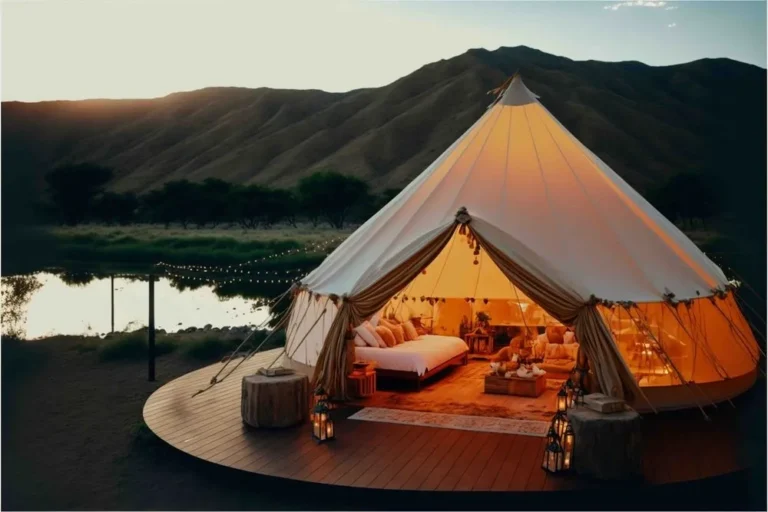
To identify the leaders in this sector, one must move beyond the visual allure of a canvas tent set in a mountain meadow. The peak of this market is defined by “Operational Elegance.” The premier properties, primarily situated across Montana, Wyoming, and Colorado, have solved the “Dirt-to-Detail” equation. They provide a high-fidelity hospitality experience while ensuring that the infrastructure does not degrade the very rangeland that guests come to witness. This report deconstructs the mechanics of elite domestic ranch stays, providing a rigorous framework for evaluating the assets that define the contemporary standard for the American West.
Best ranch glamping in the United States

The technical definition of “best ranch glamping in the United States” in 2026 has decoupled from “luxury” and moved toward “Ecological Authority.” A multi-perspective analysis reveals that a property’s standing is built on its “Integrative Transparency.” In a standard glamping site, the guest is a spectator. In a top-tier ranch retreat, the guest is positioned within a “Systemic Narrative” interacting with managed herds, restored watersheds, and historic architecture. A genuine leader in this category must solve the “Olfactory Paradox”: providing the sensory cues of a ranch (the smell of leather and sage) without the overwhelming biological odors and insect loads typically associated with livestock proximity.
A frequent misunderstanding is that these resorts are merely “luxury camps” on large plots of land. This oversimplification ignores the “Hospitality-to-Habitat Ratio” that defines the premium tier. In a standard outdoor stay, the environment is static scenery. In a top-tier ranch, the environment is an active participant. This requires the operator to manage grazing rotations and predator-deterrence programs without the guest perceiving the heavy hand of management. The risk of oversimplification is high: a traveler may book a “ranch retreat” only to find themselves in a “thematic park” where the horses are decorative and the “wildlife” is habituated to humans.
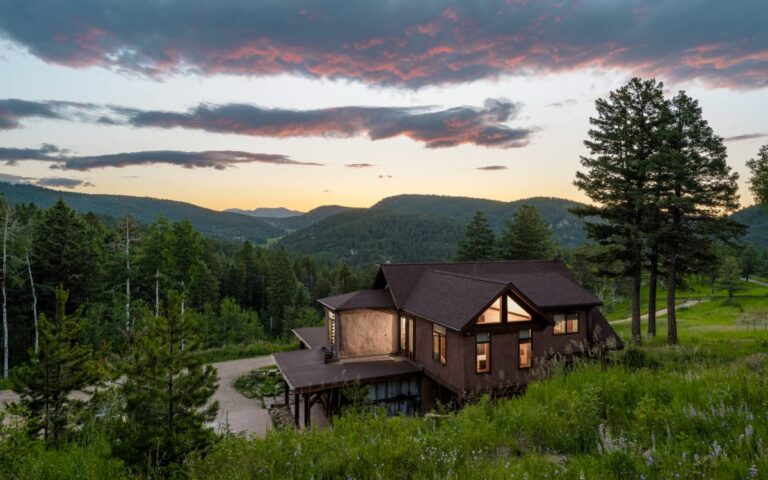
True mastery in this sector is identified by “Acoustical and Visual Exclusivity.” The premier properties, such as those found in the Bitterroot Valley or the Colorado River Basin, differentiate themselves through “Viewshed Governance.” They ensure that while the ranch may be a massive, complex operation, the individual guest’s tent or cabin remains a zone of profound silence, physically and visually shielded from the ranch’s industrial corridors. Excellence is achieved when the “ranch” provides the depth of character, while the “glamping” provides the invisibility of effort.
Historical Context: From Homesteads to Hectare-Scale Hospitality
The lineage of the American ranch dates back to the “Homestead Act” era, where survival was the primary metric of success. By the 1920s, the “Dude Ranch” emerged as a way for struggling agriculturalists to supplement their income by hosting Easterners seeking a “frontier” experience. These early iterations were often rugged, requiring guests to participate in actual ranch labor.
The modern “Glamping” era, which matured in early 2026, is defined by the “Institutionalization of the Acre.” Large-scale capital has entered the space, transforming historic homesteads into sophisticated hospitality assets. This shift has transitioned the market from “paying to work” to “paying for the narrative of work.” We are now seeing the emergence of “Conservation-First Architecture,” where guest units are designed as temporary, light-touch structures that can be removed, allowing the land to return to its primary agricultural or wild state with zero permanent footprint.
Conceptual Frameworks: The Three Pillars of Ranch Resilience

To evaluate the integrity of a high-end ranch property, utilize these three mental models:
-
The “Biological Buffer” Model: This measures the resort’s ability to maintain a 1,000-foot distance between active livestock pens and guest sleeping quarters. This distance is the “Golden Mile” required to dissipate noise, odors, and flies while maintaining the “Ranch Feel.”
-
The “Vertical Integration” Framework: Assessing the property’s culinary “Last-Mile” logic. A resort that serves beef or produce raised within its own zip code is superior. True luxury in a ranch context is the “Soil-to-Table” continuity.
-
The “Watershed Stewardship” Logic: Measuring how the resort manages its riparian zones. A property that restricts guest access to fragile streambanks to protect trout spawning grounds, even at the cost of a “better view,” demonstrates the long-term thinking required for authority.
Taxonomic Variations: Biomes, Breeds, and Regional Trade-offs
The American geography dictates the “Ranch Aesthetic.” A structure designed for the high-wind plains of Montana will fail in the humid, brush-heavy hills of the Texas Hill Country.
| Category | Typical Region | Structural Strength | Tactical Trade-off |
| Glacier-Front Tents | Montana / Wyoming | Alpine views; Cooling | Short season (June-Sept); Mosquito load |
| High-Desert Yurts | Utah / Arizona | Wind stability; Thermal mass | Poor natural ventilation; Dusty |
| Canyon-Side Pods | Colorado / Idaho | Vertical privacy; Views | Physically demanding access; Fire risk |
| Coastal Range Lodges | California / Oregon | Year-round use; Maritime air | High humidity; Corrosion of hardware |
| Prairie Safari Tents | Kansas / Nebraska | Horizon depth; Silence | Severe weather vulnerability; Flat light |
Realistic Decision Logic
Travelers must decide between “Working Proximity” and “Wilderness Isolation.” A unit located near the main lodge and stables offers the highest “Social Value” and ease of access to activities, but sacrifices the “Solitude Asset.” For those seeking a “Deep-Uncoupling,” units located on the “Back Forty” accessible only by 4×4 or horseback, are the superior play.
Operational Realities: Stress Tests and Real-World Scenarios
The “Predator-Prey” Encounter
-
Context: A luxury tent located in a “Grizzly-Active” corridor in Montana.
-
The Event: A bear enters the perimeter, attracted by the smell of a guest’s discarded snack.
-
Failure Mode: A guest encounter leading to injury or animal relocation.
-
The Elite Response: The “top” sites utilize “Hard-Shell” food storage integrated into every unit and employ “Range Riders” who use non-lethal deterrents (dogs, noise) to keep apex predators outside the guest “Sanctuary Zone.”
The “Dust-Inversion” Crisis
-
Context: A high-end ranch during a dry August in Colorado.
-
The Event: A sudden windstorm kicks up fine silt from the riding arena.
-
Failure Mode: Dust infiltrates the fine-mesh screens of the luxury tents, coating linens and electronics.
-
The Elite Response: Properties with “Environmental Resilience” utilize “Dust-Suppression” irrigation on all high-traffic roads and orient tents to account for prevailing wind patterns, creating “Wind-Shadows” that keep interiors pristine.
Planning, Cost, and Resource Dynamics
The economics of ranch glamping reflect the massive overhead of “Resource Governance.”
| Resource Category | Direct Cost (Nightly) | “Hidden” Operational Expense | Justification |
| Core Lodging | $800 – $3,500 | Rangeland Restoration Fee | Funding carbon capture and soil health. |
| Culinary Logistics | $150 – $400 | “Backcountry” Porterage | Moving fresh, organic goods via trail. |
| Equine Fee | $200 – $600 | Farrier and Vet Retention | Ensuring a 2:1 horse-to-guest ratio. |
| Stewardship Fee | $50 – $150 | Invasive Species Management | Keeping the “Pristine” look native. |
The “Value-Density” Calculation: Travelers should account for “Activity Inclusivity.” A site that is $1,000 cheaper but charges $300 per person for every trail ride is often more expensive than an all-inclusive five-star ranch where the cost of the “Remuda” (the herd) is baked into the rate.
Tools, Strategies, and Support Systems
-
Marine-Grade Canvas Liners: Essential for preventing the “flapping” sound during prairie windstorms.
-
Solar-Powered Bear Fencing: Low-profile, high-voltage wires hidden in the perimeter landscaping.
-
Acoustical “Natural” Buffering: Using berms and dense willow thickets to absorb the sound of the tractor or “Gator” transport.
-
Integrated Pheromone Logic: Using synthetic, odorless “Calming Sprays” in the units to reduce dog or human anxiety in the wild.
-
Low-Profile Water Desalination: For off-grid desert sites, treating well water to ensure five-star shower pressure.
-
“Smart-Saddle” Technology: Using GPS and weight sensors on guest horses to ensure animal welfare and trail safety.
The Risk Landscape: A Taxonomy of Rangeland Failure Modes
-
The “Over-Grazing” Aesthetic Failure: Failure to rotate livestock, leading to “Dust-Bowls” around guest units that ruin the “Pristine Meadow” asset.
-
The “Water-Table” Depletion: Using high-flow guest showers that deplete the local spring, leading to conflict with the agricultural side of the ranch.
-
The “Zoonotic” Slip: Poor manure management leading to fly outbreaks that make outdoor dining impossible.
-
The “Viewshed” Encroachment: Allowing modern ranch infrastructure (solar arrays, water tanks) to be visible from the guest “Glamping” decks.
Governance, Maintenance, and Long-Term Adaptation
A premier ranch site is defined by its “Stewardship Cycles.”
-
The “Post-Season Soil Sweep”: Full inspections of tent pads to prevent soil compaction and ensure wildflower regrowth.
-
Review Cycles: Elite sites overhaul their “Soft Goods” and exterior timber finishes every 12 months to prevent the “Grey-Rot” associated with high-altitude UV exposure.
-
Adjustment Triggers: If a property experiences a 20% decline in “Native Indicator Species” (like sage-grouse or trout), it triggers a mandatory review of guest activity density.
Measurement, Tracking, and Evaluation Signals
-
Leading Indicator: “Soil Organic Matter (SOM).” A successful ranch stay improves the health of the land over time.
-
Lagging Indicator: “Equine Soundness Rate.” High-quality guest programs have lower horse injury rates due to better trail management.
-
Qualitative Signal: “The Horizon Integrity.” The percentage of the 360-degree view that remains entirely free of anthropogenic structures.
Common Misconceptions and Market Oversimplifications
-
“It’s just a tent in a field”: No, it’s a temporary structure integrated into a multi-million dollar agricultural drainage and security system.
-
“Working ranches are dirty”: Only poorly managed ones. Top-tier properties manage “Bio-Flow” to keep guest zones pristine.
-
“All horses are the same”: The “Best” ranches have horses bred for “Gentle Disposition” but “Mountain Agility,” a rare and expensive combination.
-
“The West is always hot”: High-altitude ranches can see 40-degree temperature swings in a single day; luxury is the “Thermal Buffer” of the unit.
-
“It’s only for families”: Many of the top ranch glamping sites are now “Adults-Only” to preserve the “Silence Asset.”
-
“I can ride anywhere”: For ecological and safety reasons, elite ranches have strictly “Managed Trails” to prevent erosion and wildlife displacement.
Ethical and Practical Considerations
In 2026, the “Ethics of the Acre” is central. As best ranch glamping united states continues to evolve, properties must prioritize “Carbon Neutrality.” This involves using the ranch’s vast rangeland as a “Carbon Sink” to offset the guests’ travel footprint. From a practical standpoint, travelers must consider their “Acoustic Impact,” realizing that in the silence of the West, a loud conversation on a deck can be heard by wildlife and other guests for miles.
Conclusion
The evolution of the American ranch stay represents a maturing of our relationship with the landscape. We have moved from “Extracting” value from the land to “Partnering” with it. The resorts that define the zenith of this market are those that act as silent facilitators, providing the comfort, the safety, and the “Narrative Depth” required for the human spirit to settle into the rhythm of the rangeland. By focusing on “Operational Elegance” and “Viewshed Governance,” the best ranch glamping in the United States offers a portal to a version of the world that is both profoundly wild and perfectly managed.