Top Pet-Friendly Glamping in America: A 2026 Strategic Editorial Guide
The American outdoor hospitality sector has historically treated domestic animals as a secondary logistical consideration, an “add-on” that often necessitated a reduction in service quality or a relegation to lower-tier accommodations. However, in 2026, the market has reached a point of “Interspecies Integration.” The modern high-end traveler no longer views the pet as a satellite to the vacation, but as a central stakeholder in the experiential design. This shift has birthed a sophisticated genre of hospitality: the pressurized, high-fidelity sanctuary where the needs of the domestic animal are engineered into the structural and operational DNA of the stay.
Navigating this terrain requires a move away from the binary “pets allowed” classification and toward a “Kinetic Compatibility” audit. The challenge of maintaining a five-star standard in a wilderness environment is compounded significantly when introducing a non-human guest. Issues of “Biological Entropy,” including dander, moisture, and behavior-driven wear, must be managed through advanced materials science and precise operational protocols. The resorts that define the peak of this market are those that have solved the “Durability-to-Luxury” equation, providing an environment that feels opulent to the human touch while remaining resilient to the physical realities of a canine presence.
To identify the definitive leaders in this space, one must look beyond the provision of a welcome treat or a communal water bowl. True authority in animal-integrated hospitality is built on “Atmospheric Safety” and “Spatial Logic.” This involves the strategic separation of high-prey-drive zones from guest units, the use of non-porous, hypoallergenic interior finishes, and the implementation of acoustical damping to prevent “Alert-Barking” cycles. This report deconstructs the mechanics of elite domestic stays, providing a rigorous framework for evaluating the assets that define the contemporary standard for high-end, animal-friendly outdoor travel.
Top pet-friendly glamping in America

Navigating the fragmented marketplace of domestic animal-friendly stays requires a rejection of “Surface-Level Accommodating.” When evaluating top pet-friendly glamping in America, the primary differentiator is the “Sanitization-to-Sensory Ratio.” In lower-tier establishments, pet-friendliness often correlates with a “rugged” aesthetic, concrete floors, heavy-duty fabrics, and a perceptible lack of olfactory neutrality. The premier sites distinguish themselves by utilizing medical-grade air filtration, antimicrobial “Performance Textiles,” and integrated floor-drainage systems that allow for deep-cleaning between guests without compromising the “Soft-Luxury” feel of the suite.
A frequent misunderstanding in this sector is that a “pet-friendly” designation applies equally to all breeds and temperaments. The true leaders in the field demonstrate “Behavioral Literacy.” They understand that a 100-pound Great Dane in a canvas-walled safari tent requires a different structural reinforcement than a toy poodle. Sophisticated operators utilize “Topographical Zoning,” placing reactive dogs in units with “Visual Barriers” such as dense foliage or opaque fencing to prevent the constant visual stimulation of other guests, which is the primary driver of stress-induced behavior in wilderness settings.
Oversimplification also risks ignoring the “Invisible Health Infrastructure” of the stay. In a wilderness environment, the management of zoonotic risks (ticks, local wildlife encounters, and waterborne pathogens) is the ultimate luxury. For a site to be considered elite, it must demonstrate “Preventive Grace,” the ability to provide a safe environment through site-wide pest management and “Wilderness Orientation” sessions that inform owners of local flora and fauna risks without inducing unnecessary anxiety. The current market leaders focus on “Biophilic Safety,” ensuring the dog’s comfort does not come at the expense of the local ecosystem’s integrity.
The Historical Transition: From Tolerate to Integrate
The trajectory of the American pet-friendly stay is a narrative of “Inclusion Maturity.” In the mid-20th century, outdoor stays with animals were almost exclusively restricted to basic campgrounds where the “Pet Policy” was essentially a lack of oversight. By the early 2000s, the “Pet Fee” era emerged, where hotels allowed animals but viewed them as a liability to be taxed, often restricting them to the least desirable rooms on the ground floor.
We are now in the “Expeditionary Partnership” phase. Modern luxury is a response to the “Humanization of the Pet.” Guests now expect the same level of architectural innovation for their animals as they do for themselves. This has led to a structural evolution from the “Dog-Allowed Cabin” to custom-built glamping pods with “Built-in Nooks,” private fenced “Zen Gardens,” and dedicated “Paw-Wash Stations.” In 2026, the definition of a “best” site is no longer just about acceptance; it is about “Ergonomic Empathy”—how the structure accommodates the four-legged guest’s line of sight, cooling needs, and rest patterns.
Conceptual Frameworks: Mental Models of Animal-Centric Design
To achieve professional-grade evaluation of a pet-integrated property, utilize these three mental models:
-
The “Threshold Stress” Test: Assessing the ease of movement between the interior sanctuary and the exterior wilderness. Elite properties use “Mudroom Buffers” where a dog can be dried and checked for ticks before entering the bedroom zone, preventing the “Entropy-Transfer” of the forest into the suite.
-
The “Acoustic-Trigger” Coefficient: Evaluating the site’s “Auditory Integrity.” In the woods, sound travels differently. The best sites use “Topographical Shielding” to ensure that the sound of a closing car door or a neighboring guest’s laughter does not trigger an “Alert-Bark” cycle, which ruins the silence for everyone.
-
The “Bio-Chemical Neutrality” Framework: Measuring the resort’s reliance on “Green-Clean” protocols. Because animals spend more time in direct contact with floor surfaces and have higher respiratory rates, elite sites avoid harsh chemical cleaners in favor of UV-C light sterilization and botanical-based enzymes.
Key Categories of Structures and Regional Trade-offs
The choice of structure in an animal-integrated stay is a tactical response to the local climate and the “Containment Needs” of the breed.
| Category | Typical Region | Structural Strength | Tactical Trade-off |
| Fenced A-Frames | Blue Ridge / Appalachia | Superior containment; Verticality | Steep stairs can be difficult for senior dogs |
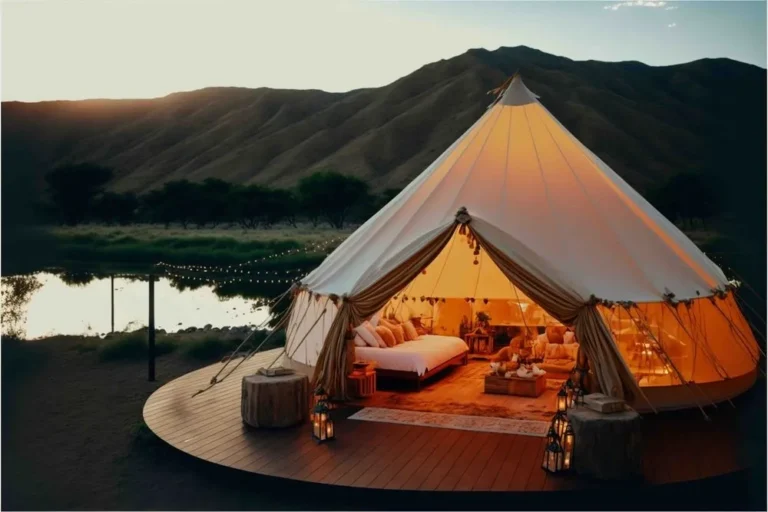
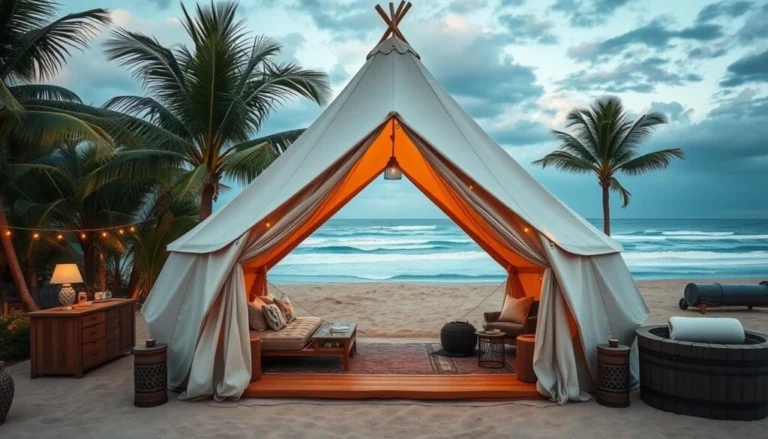
| Canvas Safari Tents | West / High Plains | High airflow; Sensory immersion | Zero acoustical barrier; Claw-vulnerability |
| Geodesic Domes | High Desert / Southwest | Climate stability; 360-views | Sound amplification (The Echo Effect) |
| Modernist Cabins | Pacific NW / Cascades | Non-porous surfaces; Mudrooms | Can feel “Clinical” if not well-styled |
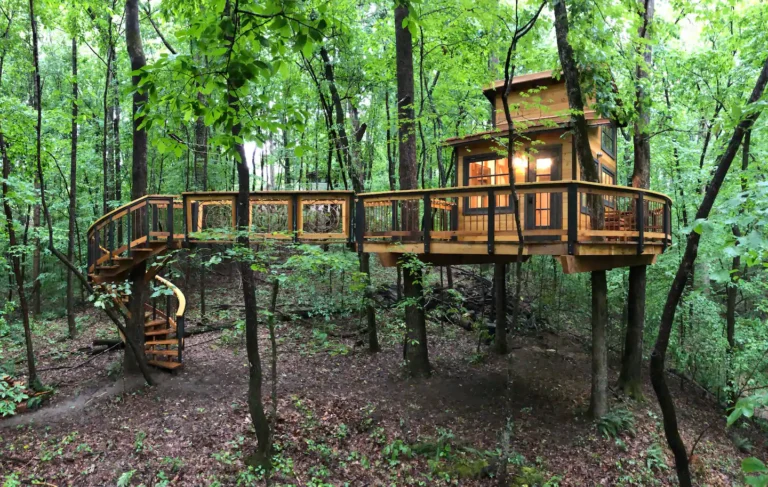
| Stilt-Treehouses | Ozarks / Coastal SE | Natural cooling; Canopy access | High “Flight Risk” on stairs/balconies |
Realistic Decision Logic
When choosing a structure, the owner must decide between “Sensory Immersion” and “Tactical Control.” Canvas tents offer the highest level of connection to the woods, but they provide almost no protection against the sounds of a midnight raccoon or the smell of a nearby campfire, both of which can overstimulate a reactive dog. For those with “High-Drive” animals, hard-sided modernist cabins with integrated mudrooms provide the necessary “Boundary Clarity” to ensure a restful stay.
Detailed Real-World Scenarios and Operational Decision Points
The “Midnight-Alert” Chain Reaction
-
Context: A luxury glamping site with ten safari tents in proximity.
-
The Event: A coyote howls at 2:00 AM, triggering one dog to bark.
-
Failure Mode: All ten dogs begin a “Chain-Barking” cycle; the “Silence Asset” of the resort is destroyed for the night.
-
The Elite Response: Properties utilize “Buffer-Zone Planning,” placing a minimum of 50 feet of sound-absorbing vegetation between units and providing “White-Noise” machines to mask external biological sounds.
The “Zoonotic-Transfer” Event
-
Context: A guest returns from a hike in the Northeast with a dog covered in deer ticks.
-
The Event: The owner fails to check the dog; ticks migrate to the bed linens.
-
Failure Mode: The next guest (without a pet) finds ticks in the bedding, leading to a catastrophic brand failure.
-
The Elite Response: Elite operators mandate “Tick-Check” stations at trailheads and utilize “Micro-Linen” weave that prevents parasites from latching onto the fibers, combined with high-heat laundry protocols.
Planning, Cost, and Resource Dynamics
The economics of animal-integrated luxury are driven by the “Entropy Premium.” Maintenance costs are roughly 30% higher due to the increased wear and specialized cleaning required.
| Cost Tier | Nightly Range | Primary Asset | Opportunity Cost |
| Ultra-Luxe | $900 – $2,500 | Private Fenced Acreage; In-room Spa | Limited availability; Strict breed screening |
| Premium | $500 – $850 | Built-in Nooks; Performance Fabrics | Proximity to other canine guests |
| Boutique | $250 – $450 | Aesthetic Design; Off-leash areas | Limited in-room climate control |
The “Maintenance Premium”: A site that charges a “Flat Fee” of $50 is often just covering the cost of a standard carpet clean. A $250 “Integrated Fee” at an elite site covers UV-C sterilization, “Pheromone Diffusers” to reduce animal anxiety, and the provision of “Bio-Degradable” amenities that protect the local soil.
Tools, Strategies, and Support Systems

-
Acoustic “Pink-Noise” Generators: To mask the unpredictable sounds of wildlife that trigger domestic stress.
-
UV-C Sterilization Lamps: Used during housekeeping to kill 99.9% of bacteria and viruses without leaving a chemical scent.
-
GPS “Boundary” Collars: Provided by the resort for use during the stay, allowing for “Safe-Roaming” within geo-fenced conservancy areas.
-
Hypoallergenic “Crypton” Fabrics: Performance textiles that are stain, odor, and moisture resistant while retaining the feel of high-end cotton or linen.
-
Biophilic “Cooling Stations”: Stone-floored nooks with dedicated ventilation to manage the higher body temperature of large breeds.
-
“Pheromone-Logic” Diffusers: Integrated HVAC units that release calming synthetic pheromones to reduce “New-Environment” anxiety.
The Risk Landscape: A Taxonomy of Multi-Species Failure Modes
-
The “Olfactory-Shadow” Failure: A structure that retains the scent of the previous dog. This triggers the current guest animal to “Mark” the territory, leading to a compounding hygiene failure.
-
The “Prey-Drive” Collision: A resort with no “Visual Buffers” where a dog sees a deer or squirrel through a screen door, leading to structural damage to the screen and animal stress.
-
The “Chemical-Respiratory” Trap: Using high-VOC (Volatile Organic Compound) cleaners in a small, enclosed pod, which can cause respiratory distress in brachycephalic (flat-faced) breeds.
-
The “Escapology” Failure: Decks or balconies with railings spaced too far apart, allowing small dogs to fall or escape into the wilderness.
Governance, Maintenance, and Long-Term Adaptation
Operating in the animal-integrated space requires a “Constant-Vigilance” protocol.
-
The “Odor-Audit”: Quarterly professional air-quality testing to ensure that “Bio-Scents” are not accumulating in the structural porous materials.
-
Vegetation Management: Ethical sites perform “Toxicology Sweeps” to ensure that no decorative plants (like azaleas or sago palms) are within reach of guest units.
-
The “Claw-Wear” Review: Monthly inspection of floor finishes and fabric integrity to ensure that the “Luxury” aesthetic is not being degraded by physical activity.
Measurement, Tracking, and Evaluation Signals
-
Leading Indicator: “The Settle Time.” How long does it take a guest animal to reach a resting heart rate after entering the unit? Elite designs reduce this through pheromones and “Nook-Logic.”
-
Lagging Indicator: “Fabric Replacement Rate.” If fabrics are replaced every three months, the “Sanitization Logic” is failing. Elite sites aim for 18–24 months of “Pristine Integrity.”
-
Qualitative Signal: “The Nose-Print Index.” The amount of visual smudging on windows at dog-level. High-end sites use anti-static glass coatings to minimize this.
Common Misconceptions and Market Oversimplifications
-
“Pet-friendly means ‘anything goes'”: This is a myth. The most elite sites have the strictest behavioral rules to protect the silence of the forest.
-
“Wood floors are better for dogs”: Not always. Hardwood can be slippery, causing joint stress. High-end sites use “Textured Luxury Vinyl” or “Low-Pile Performance Rugs” for traction.
-
“Tents are too fragile for big dogs”: Modern glamping canvas is often 12-15oz duck canvas that is incredibly difficult to pierce.
-
“Dogs love the wild”: Many dogs find the sounds and smells of the wilderness terrifying. Luxury is providing a “Safe Box” within that wildness.
-
“All fees are profit”: In reality, the “Pet Fee” at a top site is usually a break-even cost for the specialized labor and technology required.
-
“Off-leash is better”: Uncontrolled off-leash areas lead to ecosystem damage and inter-dog conflict. “Curated Leash-Roaming” is the elite standard.
Ethical and Practical Considerations
The rise of the top pet-friendly glamping in America has introduced the “Ecological Displacement” issue. Domestic animals can disrupt the nesting patterns of ground-dwelling birds and leave “Bio-Signals” that confuse local predators. The authoritative sites address this through “Designated Relief Areas” that use specialized filtration to prevent waste from entering the local water table. From a practical standpoint, owners must consider their dog’s “Acoustic Footprint.” A dog that barks at the wind is not a fit for a high-density glamping retreat.
Conclusion
The evolution of the canine-integrated stay represents a shift from “Pet Acceptance” to “Species-Specific Architecture.” We have moved beyond the “Dog in a Tent” era toward a model of “Interspecies Harmony.” The resorts that define the zenith of this market in 2026 are those that act as a silent facilitator, providing the sanitization, the safety, and the psychological comfort required for both human and animal to settle. By focusing on “Atmospheric Safety” and “Behavioral Literacy,” the best pet-friendly retreats in the United States offer a version of the world that is both profoundly wild and perfectly civilized.