Top Wilderness Retreats in America: The Definitive 2026 Editorial Guide
The concept of “wilderness” in the American psyche has transitioned from a frontier to be conquered into a rare resource to be curated. In 2026, the domestic hospitality landscape has moved beyond the rudimentary cabins of the mid-20th century, birthing a sophisticated tier of “Deep-Immersion” retreats. These assets are not merely hotels situated in rural areas; they are complex operational systems designed to facilitate a psychological and physiological “uncoupling” from the anthropogenic world. This shift represents a fundamental maturation of the traveler’s hierarchy of needs, where the primary luxury is no longer gilded service, but “Acoustical and Biological Autonomy.”
Operating within these primitive zones requires a mastery of “Invasive Harmony.” The paradox of the modern high-end wilderness stay lies in the delivery of pressurized, climate-controlled comfort within environments that are actively hostile to infrastructure. The retreats that define the peak of this market are those that have solved the “Resource Paradox,” providing five-star amenities such as artisanal culinary programs and high-speed satellite connectivity while remaining entirely invisible to the surrounding ecosystem. This is a triumph of engineering and logistical precision, where the “Invisible Footprint” is the ultimate indicator of quality.
To identify the definitive leaders in this sector, one must move beyond the visual allure of a timber-framed lodge or a glass-walled cabin. The peak of this market is defined by “Topographical Integrity.” The premier properties are those that have solved the “Density-to-Silence” equation. They ensure that while the property may be profitable, the individual guest’s sanctuary remains a zone of profound isolation. This report deconstructs the mechanics of elite wilderness stays, providing a rigorous framework for evaluating the assets that currently define the contemporary standard for American outdoor travel.
Top wilderness retreats in America

The technical definition of top wilderness retreats in America has decoupled from “remoteness” and moved toward “Environmental Sovereignty.” In the 2026 market, the elite tier is distinguished by its “Resilience-to-Comfort Ratio.” A multi-perspective analysis reveals that a property’s authority is built on its ability to provide a high-fidelity hospitality experience in zones characterized by extreme meteorological volatility. A genuine luxury retreat in this category must solve the “Exposure Paradox,” ensuring that digital connectivity and internal thermal stability remain pristine despite constant exposure to high-altitude winds, desert heat, or maritime humidity.
A frequent misunderstanding in the marketplace is that these resorts are merely high-priced versions of traditional “off-grid” cabins. This oversimplification ignores the “Hospitality-to-Logistics Ratio” that defines the premium tier. In a standard hotel, the guest interacts with a static building connected to a municipal grid. In a top-tier wilderness retreat, the guest interacts with a managed, shifting ecosystem. This requires the operator to manage wildlife corridors, water-table fluctuations, and fire-regime maintenance without the guest perceiving the heavy hand of management. The risk of oversimplification is high: a traveler may book a “wilderness retreat” only to find themselves in a high-density “luxury park” where acoustic privacy is nonexistent because the operator failed to account for how sound travels across open canyons or tundra.
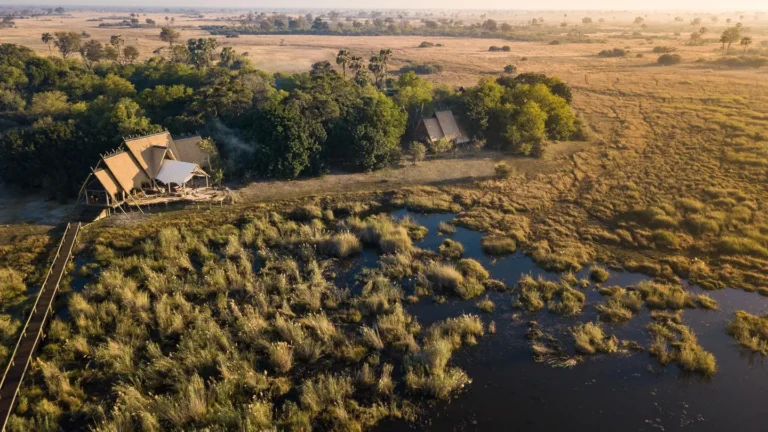
True mastery in this sector is identified by “Atmospheric Depth.” The premier properties found in the high-desert plains of the Southwest, the old-growth forests of the Pacific Northwest, and the glacial valleys of Alaska differentiate themselves through “Proprietary Viewsheds.” They offer guests access to private landholdings that are physically and visually separated from the high-traffic corridors of state and national parks. Excellence is achieved when the “wilderness” is the primary asset, and the “retreat” is the silent facilitator of its observation.
The Historical Transition: From Frontier Hardship to Curated Isolation
The lineage of the American wilderness dates back to the late 19th-century “Great Camps” of the Adirondacks. These were massive timber estates where the elite sought a “primitive” connection to nature, albeit supported by a massive hidden staff. By the mid-20th century, the “National Park Lodge” era introduced a domesticated version of the wild, but it was often disconnected from the landscape, relying on heavy walls to shut nature out.
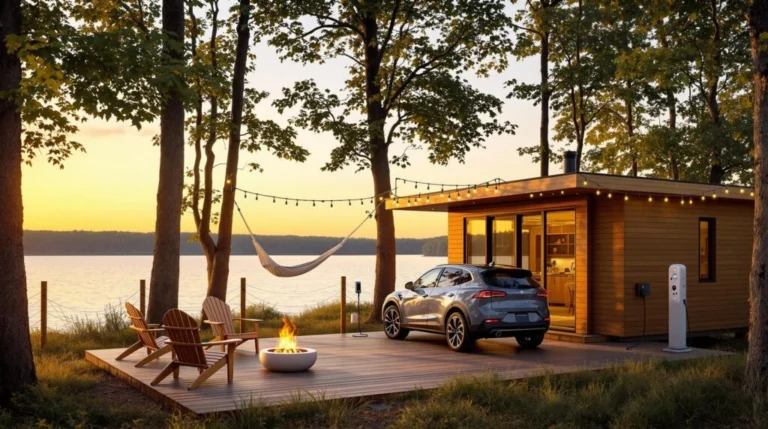
We are now in the “Integrated Immersion” phase. Modern wilderness luxury is a response to the “over-domestication” of contemporary life. Guests want the sensory input of the wild, the smell of rain on sagebrush, the sound of wind through hemlock, without the physical degradation of traditional camping. This has led to a structural evolution from the simple log cabin to high-tech mirror-glass pods and elevated platforms. In 2026, the definition of a “best” site is no longer just about the bedding; it is about the “Architectural Dialogue” between the shelter and the soil.
Conceptual Frameworks: Mental Models of Wilderness Resilience
To evaluate the integrity of a high-end wilderness property, utilize these three mental models:
-
The “Sensory Continuity” Model: This assesses if the resort’s design (colors, textures, soundscapes) matches the local biome. If the retreat is in the high desert, does it use sand-toned materials and prioritize cross-ventilation? If it is in the maritime forest, does it prioritize moisture-wicking textiles?
-
The “Logistical Friction” Framework: Measuring the ease of access relative to the level of isolation. The best retreats have “Managed Approaches”—private airstrips or long, curated forest roads—that ensure the guest’s psychological state shifts long before they reach the unit.
-
The “Biophilic-Integration” Framework: Measuring the structure’s physical impact on the local flora. A resort that utilizes “Selective Pruning” and helical pier foundations to nestle structures into the existing landscape is superior to one that clears land for a “view.”
Taxonomic Variations: Regional Biomes and Tactical Trade-offs
The American biome dictates the architecture of the stay. A structure designed for the dry, high-wind plains of Wyoming will fail in the humid, insect-heavy marshes of the Southeast.
| Category | Typical Region | Structural Strength | Tactical Trade-off |
| Mirror-Glass Pods | High Desert / Utah | Visual immersion; Thermal mass | High exterior cleaning; Bird-strike risk |
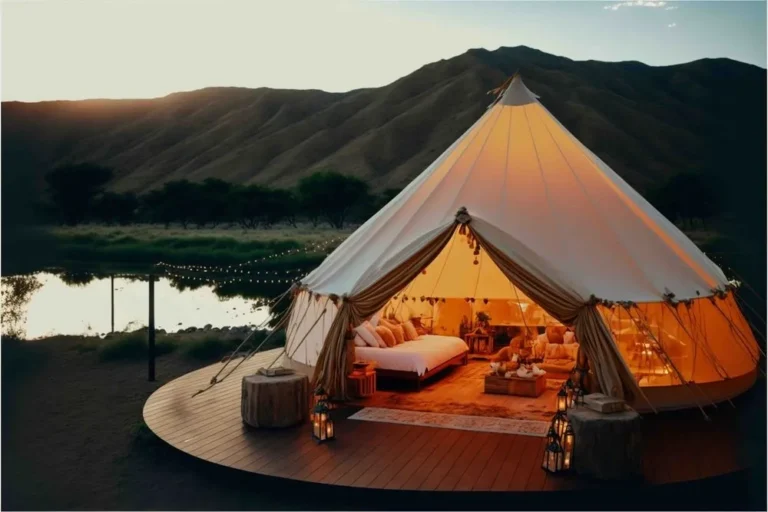
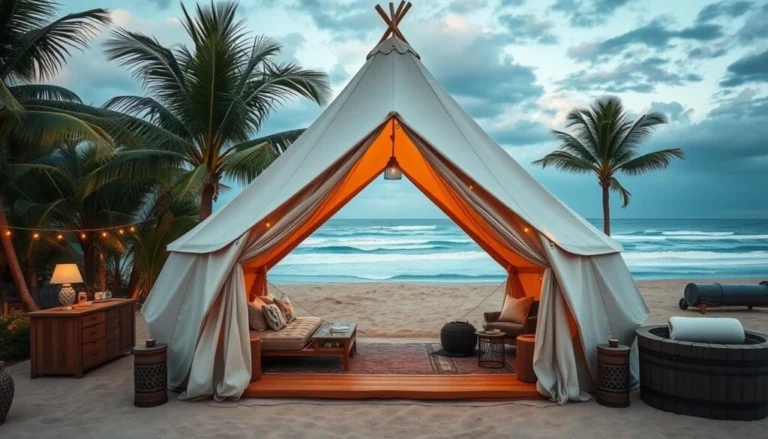
| Canvas Safari Lodges | Plains / Montana | Breathability; Iconic aesthetic | Poor acoustical insulation; Moisture risk |
| Elevated Pier Cabins | Maritime Forest / NW | Moisture resilience; View depth | High wind-sway; Labor-intensive service |
| Modernist Adobes | Southwest / NM | Extreme heat regulation | Can feel “closed-in”; Minimal scent flow |
| Glacial Basecamps | Alaska / Tundra | Wind/Snow load capacity | High energy cost; Limited seasonal use |
Realistic Decision Logic
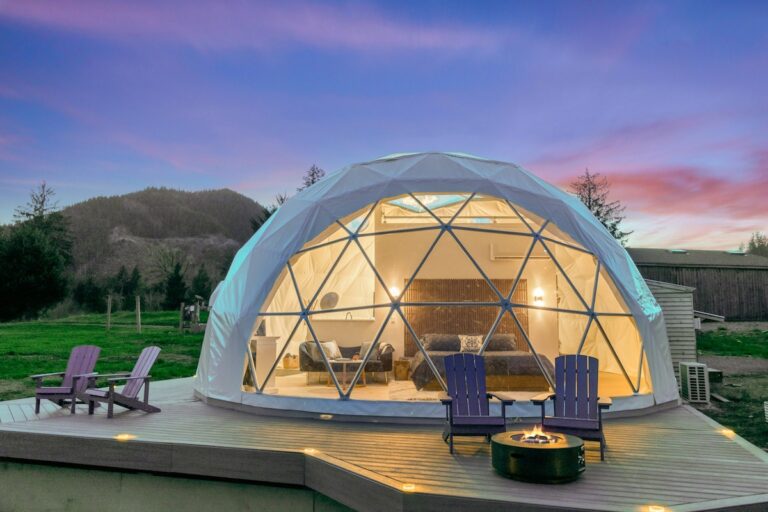
When selecting a structure, the traveler must decide between “Visual Immersion” and “Acoustical Stability.” Glass cabins offer the highest connection to the woods but require the guest to be more tolerant of sunlight and temperature shifts. For those who prioritize “Residential Sleep Quality,” hard-sided structures with “Floating Floor” technology are superior, as they provide the acoustical and thermal insulation required for deep rest.
Operational Realities: Detailed Real-World Scenarios
The “Entry-Corridor” Logistics Gap
-
Context: A guest stays at a luxury retreat near a major National Park during the summer peak.
-
The Problem: The main road to the retreat is shared with public park traffic, leading to a three-hour wait.
-
The Failure: The retreat provides no guidance, leaving the guest stuck in traffic for 30% of their stay.
-
The Elite Response: The “top” sites provide “Shadow Itineraries”—private access roads or helicopter transfers that bypass public congestion entirely.
The “Humidity-Spike” Resilience Test
-
Context: A luxury glass cabin in the Olympic Peninsula during a week of persistent rain.
-
The Event: Exterior humidity remains at 99% for five consecutive days.
-
Failure Mode: Condensation on the interior glass obscures the view; towels never dry; wood finishes begin to swell.
-
The Elite Response: Properties utilize “Positive Pressure” ventilation and heated window-mullions to ensure the glass remains clear and the interior remains dry, regardless of exterior saturation.
Planning, Cost, and Resource Dynamics

The economics of wilderness luxury are driven by the “Cost of Maintenance” in high-friction environments.
| Cost Tier | Nightly Range | Primary Asset | Opportunity Cost |
| Ultra-Luxe | $1,800 – $4,500 | Private Guide; Remote Acreage | 18-month booking lead time |
| Premium | $800 – $1,500 | En-suite Spa; Climate Control | Proximity to other guest units |
| Boutique | $400 – $750 | Design Aesthetic: Off-grid | Self-management of logistics |
The “Invisibly Displaced” Cost: Travelers should account for “Transit Opportunity Cost.” A site that is $200 cheaper but requires an 8-hour drive from the nearest regional airport is less valuable than one with a private airstrip that maximizes “Time-in-Field.”
Tools, Strategies, and Support Systems
-
NOAA-Linked Weather Terminals: In-unit tablets provide real-time updates on flash floods or sudden snow squalls.
-
Phase-Change Cooling Materials: High-end desert sites use specialized bedding that absorbs body heat during the day and releases it at night.
-
Grey-Water Sub-Irrigation: Systems recycle shower water to maintain local flora surrounding the retreat, creating a “Micro-Oasis.”
-
Starlink-Mesh Connectivity: Essential for “Dead Zones” where canopy density or topography blocks standard signals.
-
Acoustic “Pink-Noise” Buffering: Natural waterfalls or strategically placed vegetation mask the sound of distant traffic or wind-whistle.
-
E-Ink Trail Maps: Low-power, high-contrast digital maps provided to guests that work in direct sunlight and off-grid.
The Risk Landscape: A Taxonomy of Wilderness Failure Modes
-
The “Atmospheric-Seal” Failure: In maritime environments, a failure in window sealing leads to salt-air infiltration, which corrodes electronics and ruins linens.
-
The “Grid-Dependency” Trap: Resorts that rely on local rural power grids are prone to blackouts during peak weather events, leaving guests without fans or lighting.
-
The “Habituation-Loop” Risk: Improper food-waste management leads to wildlife habituation, eventually resulting in animal relocation or dangerous guest encounters.
-
The “Topographical-Blindness” Risk: Designing a camp in a “cold-sink” where morning temperatures are 15 degrees lower than the surrounding ridges, causing HVAC failure.
Governance, Maintenance, and Long-Term Adaptation
Operating in the wilderness requires a “High-Frequency Review Cycle.”
-
The “Monthly Biotic Audit”: Full inspections of the retreat footprint to ensure no localized soil compaction or vegetation die-back.
-
Review Cycles: Elite sites replace their “Soft Goods” (canvas, linens) every 12 months to prevent “Grey-Rot” and mildew odors.
-
Adjustment Triggers: If a property experiences more than a 10% decline in local species sightings, it triggers a mandatory “Low-Impact” operational pause.
Measurement, Tracking, and Evaluation Signals
-
Leading Indicator: “Park-Entry Efficiency.” The average time it takes a guest to move from their bed to a truly primitive trailhead.
-
Lagging Indicator: “Wildlife Intrusion Rate.” Tracking the number of animal sightings within the camp as a proxy for successful waste management.
-
Qualitative Signal: “Dark-Sky Visibility.” Counting stars visible from the deck measures the success of the resort’s light-pollution mitigation.
Common Misconceptions and Market Oversimplifications
-
“Wilderness means ‘no power'”: In the 2026 market, luxury means high-fidelity power delivered invisibly via solar and battery storage.
-
“Tents are always cheaper”: Luxury glamping often costs 3x more than a park lodge due to the high cost of off-grid services.
-
“The desert is always quiet”: Wind noise in canyons can be deafening; luxury is the architectural ability to filter that noise.
-
“Wildlife is friendly”: “Disneyfication” of nature is dangerous; elite retreats educate guests that a deer is just as unpredictable as a bear.
-
“You don’t need a car”: Unless there is a robust private shuttle, you still need a high-clearance vehicle for last-mile dirt roads.
-
“It’s only for summer”: Many of the best wilderness experiences, like wolf tracking or aurora viewing, happen in mid-winter.
Ethical and Contextual Considerations in Primitive Lands
The rise of the top wilderness retreats in America has introduced “Wilderness Gentrification.” Luxury sites bid up the price of gateway land, pushing out residents. Authoritative operators address this through “Local Sourcing” and “On-Site Staff Housing.” From a practical standpoint, travelers must consider their “Visual Footprint”, the way their presence affects the view from the interior of a protected area looking out.
Conclusion
The pursuit of luxury in the American wilderness represents a journey toward “Ecological Coexistence.” We have moved beyond the need to “conquer” the wild and toward a desire for “Dynamic Integration” with it. The retreats that define the zenith of this market are those that act as a silent facilitator, providing the warmth, the safety, and the refinement required for the human spirit to settle into the rhythm of the primitive clock. By focusing on “Atmospheric Integrity” and “Logistical Grace,” the best wilderness retreats in the United States offer a portal to a version of the world that is both profoundly raw and perfectly refined.